
Haul taller loads without permits. Compare drop deck trailer vs. flatbed and explore step deck trailer dimensions, specs, and performance from Trail King.
At Trail King, we design trailers to solve real hauling challenges. When operations require moving taller equipment, improving efficiency or staying within legal limits, the step deck trailer is one of the most practical solutions. If you’re wondering what are the advantages of using a step deck trailer, the answer is compliance, versatility and performance.
This blog explains what professionals need to know, from design and use cases to technical details that affect long-term success.
What Is a Step Deck Trailer?
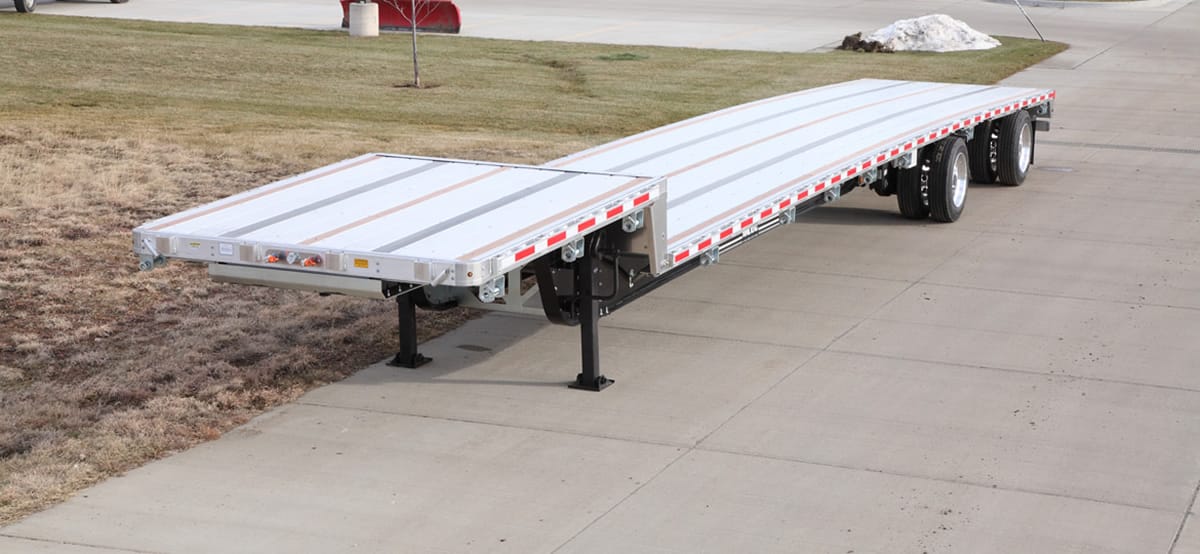
A step deck trailer, sometimes called a drop deck, is similar to a flatbed but with one key difference. It features two deck levels: a raised front section and a lower rear deck that sits closer to the ground.
This design lets you haul taller freight without exceeding legal height limits, a key advantage in industries handling large or irregular equipment.
Typical configurations include:
- Lengths between 48 and 53 feet
- Standard width of 8 feet 6 inches
- Lower deck height around 3.5 to 4 feet
- Payload capacity often approaching 48,000 pounds.
The lowered deck makes this trailer valuable for professional hauling operations.
Step Deck vs. Flatbed: Why the “Step” Matters
At first glance, step decks and flatbeds look similar, but the difference lies in performance.
Height Advantage
Flatbeds sit higher, limiting cargo height before permits are needed. Step deck trailers allow taller loads to be transported legally by lowering the deck height.
Legal Compliance
With the extra clearance, many loads needing permits on a flatbed can be hauled without extra paperwork on a step deck.
Stability
The lower deck reduces the center of gravity, improving stability and lowering the risk of shifting during transport.
When Should You Choose a Step Deck Trailer?
Step deck trailers are ideal when your operation needs flexibility and efficiency.
Construction & Agriculture
These trailers are commonly used to transport:
- Excavators
- Bulldozers
- Tractors and harvesters
The lower deck lets equipment be hauled without exceeding height limits, easing job site logistics.
Industrial Applications
Step decks are also widely used for:
- Generators
- Tanks and compressors
- Structural materials
Their open design enables easy loading with cranes or forklifts.
Ease of Loading
Step deck trailers can accommodate ramps, letting wheeled equipment be driven directly onto the trailer. This reduces needing extra equipment and speeds loading.
Technical Specs: What Professionals Look For
Choosing the right step deck trailer involves more than knowing its basic design.
Load Capacity
Professionals evaluate both:
- Distributed loads across the deck
- Concentrated loads in specific areas
Matching the trailer’s capacity to your hauling needs for safety and compliance.
Deck Materials
Material choice affects durability, weight and long-term performance.
Trail King’s steel-aluminum combination design delivers:
- Steel strength in the main frame for structural integrity
- Aluminum decking for reduced weight and corrosion resistance
This balance lets operators maximize payload while maintaining durability.
Braking & Safety
Reliable braking systems are essential, especially for long hauls and heavy loads. Proper braking improves control, reduces wear and enhances safety under demanding conditions.
The Trail King Advantage for Long Haul Performance
Not all step deck trailers are built the same.
Trail King’s steel-aluminum combo center frame step deck trailer is engineered to deliver:
- Reinforced steel strength where it matters most
- Weight savings through aluminum components
- Increased payload capacity
- Long-term corrosion resistance
This design supports consistent performance across long distances and tough environments, helping operators reduce downtime and maximize return on investment.
Comparison: Trail King vs. Standard Commodity Trailers
| Feature | Trail King Step Deck | Standard Commodity Trailer |
| Frame Strength | Reinforced steel main beam | Basic frame construction |
| Weight Efficiency | Aluminum deck reduces weight | Heavier materials reduce payload |
| Corrosion Resistance | High resistance for long-term use | Limited protection |
| Payload Capacity | Optimized for maximum efficiency | Lower due to added weight |
| Longevity | Built for long-term performance | Shorter service life |
Frequently Asked Questions
What measures are taken to reduce empty trailer bounce?
Trail King designs focus on structural balance and material distribution to minimize vibration and improve ride quality during empty miles.
How are ground clearance challenges handled?
The step deck design provides better clearance for transitions like railroad crossings and steep grades compared to lower-profile trailers.
How is tire wear and heat managed?
Engineering considerations support proper weight distribution, helping reduce excessive wear and heat buildup on low-profile tires.
Does the step reduce payload capacity?
While the step adds structure, using lightweight materials helps maintain strong payload capacity without sacrificing durability.
Are tie-down points easy to access?
Winch tracks and tie-down systems are positioned to enable efficient, safe operation, even with larger loads.
How does the electrical system hold up in harsh environments?
Trail King trailers are designed to perform in demanding climates, including regions with high corrosion exposure.
Why a Step Deck Trailer Is the Smart Choice for Your Operation
A step deck trailer is more than a modified flatbed. It is a strategic tool for improving compliance, efficiency and safety in your operation. By understanding what to look for and choosing a trailer designed for real-world performance, you can reduce costs, improve productivity and handle a wider range of loads with confidence. Explore Trail King’s steel-aluminum step deck trailers and see how smart engineering delivers strength, durability and payload efficiency for your toughest hauls.