
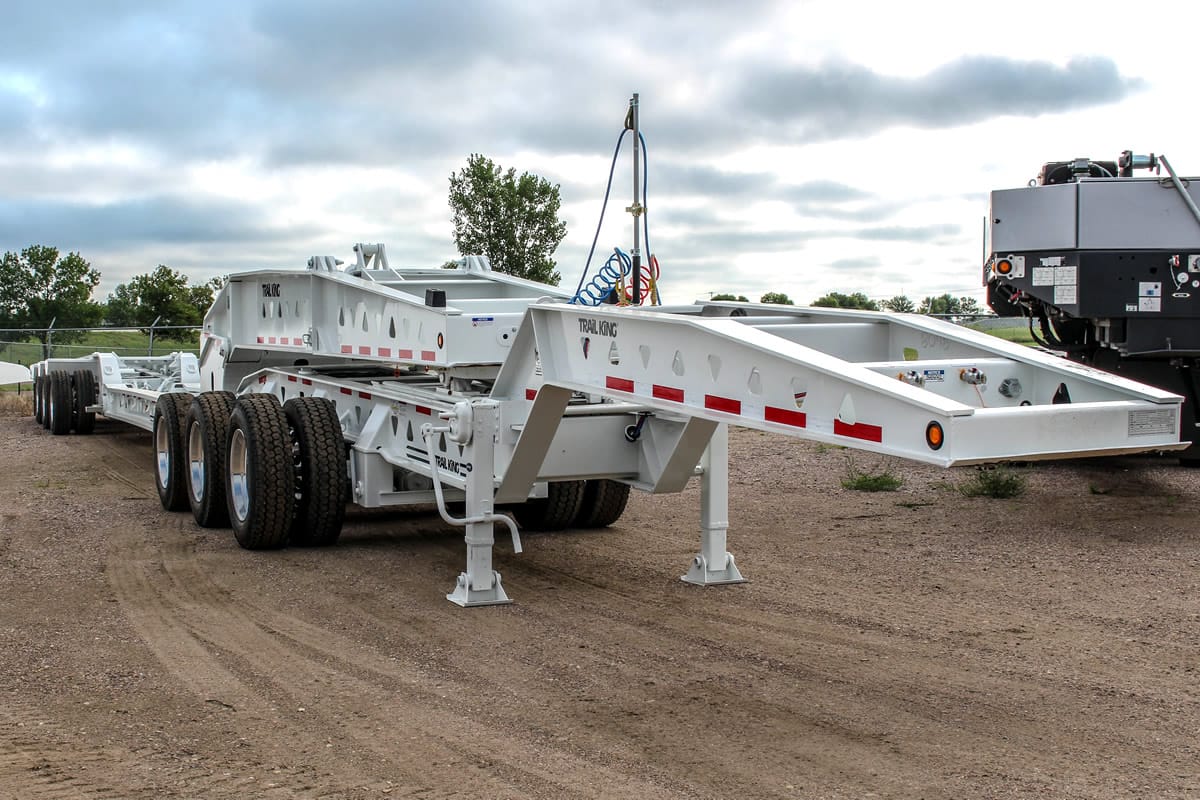
At Trail King, we know that trailer performance is not just about strength or size. One of the most overlooked factors in hauling efficiency is weight. From daily operations to long-term costs, the weight of your trailer plays a critical role in how your business performs.
Understanding what is GAWR on a trailer and how weight impacts your operation can help contractors, fleet managers and owner-operators make smarter decisions. The right balance between durability and weight can improve efficiency, increase payload and keep your equipment working at its best.
Why Trailer Weight Impacts Performance
Trailer weight affects more than just how much you can haul. It directly influences fuel efficiency, payload capacity and overall performance on the road.
Heavier trailers require more energy to move, which leads to increased fuel consumption over time. On the other hand, lighter trailers can improve efficiency and allow you to carry more payload within legal limits.
However, lighter is not always better. A trailer still needs to be strong enough to handle demanding applications. The goal is to find a balance that supports both performance and durability.
What Is GAWR on a Trailer?
GAWR stands for Gross Axle Weight Rating. It refers to the maximum amount of weight that each axle can safely support, including both the trailer and its load.
This rating is critical when determining how much weight your trailer can handle without putting stress on key components. Exceeding GAWR can lead to premature wear, reduced performance and potential safety issues.
Understanding this rating helps ensure your trailer is operating within safe limits while maximizing efficiency.
Load Distribution and Stability
Proper weight distribution is just as important as total weight. When weight is not evenly balanced, it can lead to instability, increased tire wear and reduced control during transport.
Placing more weight toward the front of the trailer helps maintain stability and reduces the risk of sway.
A well-balanced load improves handling, braking and overall safety, especially during long hauls or when operating in challenging conditions.
What Is the 80% Rule in Towing?
The 80% rule suggests that you should tow no more than 80% of your vehicle’s maximum towing capacity.
Following this guideline provides a margin of safety that improves control and braking performance. It also helps reduce strain on your equipment, which can extend the life of both your trailer and your tow vehicle.
What Is the 60/40 Rule for Trailers?
The 60/40 rule refers to how weight should be distributed across your trailer. About 60% of the load should be placed toward the front, with the remaining 40% toward the rear.
This balance helps maintain proper alignment and reduces the risk of instability while hauling. It is a simple but effective guideline that can improve both safety and performance.
Is It Better to Have More Weight in the Front or Back of a Trailer?
More weight should be positioned toward the front of the trailer.
This forward distribution helps maintain better control, reduces trailer sway and improves overall stability during transport. Improper weight placement, especially too much weight in the rear, can negatively impact handling and increase risk on the road.
Does a Lighter Trailer Always Mean Better Performance?
Not necessarily. While lighter trailers can increase payload capacity and improve fuel efficiency, they must still be built to handle the demands of your job.
A trailer that is too light may lack the structural strength needed for heavy-duty applications. The key is finding a design that balances reduced weight with the durability required for your operation.
How Trailer Weight Affects Fuel Efficiency
Fuel efficiency is directly tied to how much weight your vehicle is pulling. Heavier trailers increase resistance and require more power, which leads to higher fuel consumption.
Reducing trailer weight can improve fuel efficiency, especially for operations that involve long distances or frequent hauling.
Over time, even small improvements in fuel efficiency can lead to significant cost savings.
Finding the Right Balance
The most effective trailer is not simply the lightest or the strongest. It is the one that delivers the right combination of both.
Contractors and fleet managers need to consider:
- the type of materials or equipment being hauled
- frequency of use
- terrain and jobsite conditions
- long-term maintenance and operating costs
By understanding how weight impacts performance, you can choose equipment that improves productivity, supports compliance and delivers long-term value.
Final Thoughts
Trailer weight plays a bigger role in your operation than most realize. From fuel efficiency and payload capacity to safety and compliance, understanding how weight impacts performance can help you make smarter decisions.
Choosing the right trailer means finding the balance between strength and efficiency so your equipment performs consistently, no matter the job.
Explore Trail King trailers engineered to balance strength and weight, helping you maximize payload, improve efficiency and stay compliant on every haul. View our equipment to see what works best for your needs.