
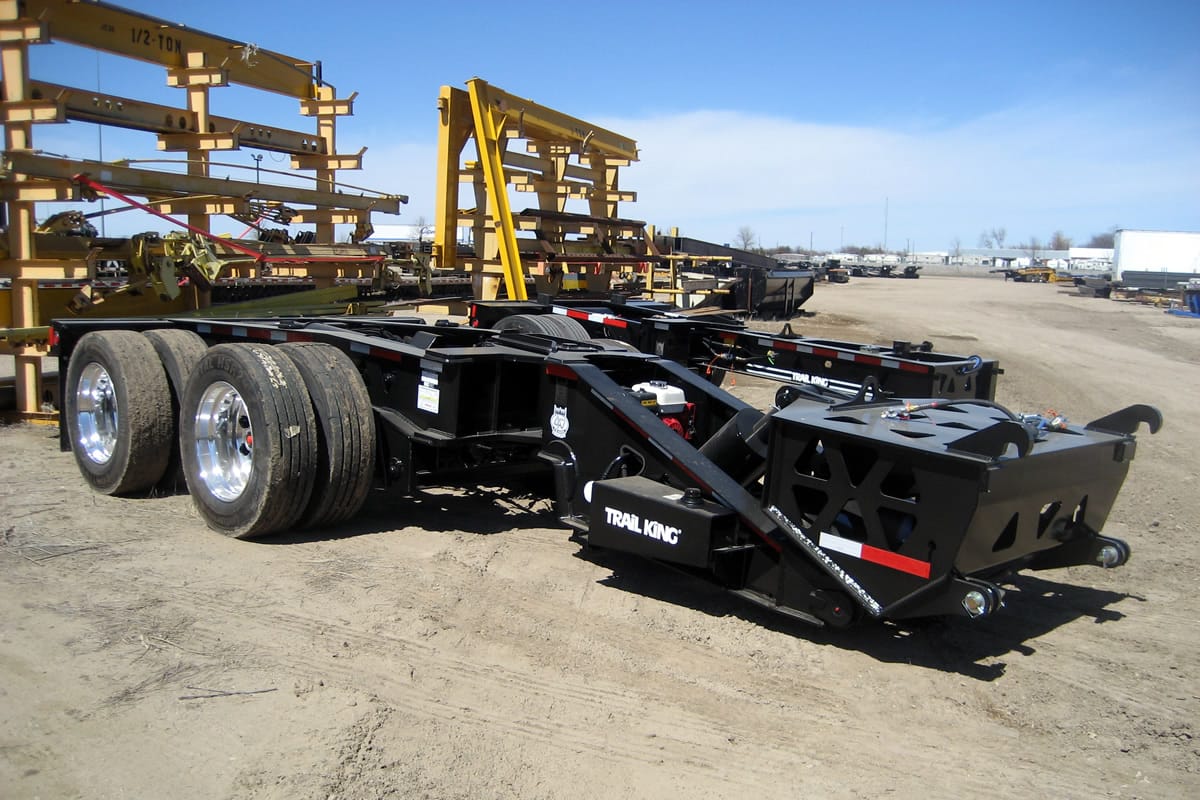
Choosing the right trailer isn’t just a purchase decision. It is a strategic move that impacts efficiency, safety, and long-term costs. At Trail King, we understand every operation is different, so selecting the right trailer starts with understanding your specific hauling needs.
How to Choose the Right Trailer
To choose the right trailer, contractors and fleet managers must evaluate load type, weight requirements, terrain, and frequency of use. The right trailer should support efficient loading and unloading, meet regulatory requirements, and provide long-term durability for demanding jobs.
Start With Your Hauling Application and Business Needs
Every trailer has a purpose. Before selecting among commercial trailer types, define exactly what your operation requires.
Are you hauling heavy equipment across job sites? Moving aggregates like gravel or asphalt? Transporting materials long distances or working in tight, urban environments?
Understanding your primary use case sets the foundation for the right decision. A trailer that works well for construction equipment may not be ideal for material hauling, and vice versa.
Match the Trailer Type to Your Cargo and Equipment
The type of load you haul should directly influence your trailer choice.
Heavy equipment, such as excavators and skid loaders, often requires step deck or detachable gooseneck trailers for proper clearance and safe loading. Materials like sand, gravel, and asphalt are suited to bottom-dump, live-bottom, or side-dump trailers, which allow controlled and efficient unloading.
Choosing the wrong trailer for your cargo can cause delays, safety risks, and unnecessary equipment wear. Matching the trailer to your load ensures better performance and productivity.
Consider Capacity, Weight Distribution and Compliance
Load capacity is a key factor when selecting a trailer. You must account for both total weight and how it is distributed.
Improper loading can cause safety issues and compliance violations. Understanding weight distribution guidelines ensures stability and better control on the road.
For example, following best practices like balanced loading reduces strain on your equipment and improves towing performance.
Evaluate Terrain and Job Site Conditions
Where you operate matters just as much as what you haul.
Uneven terrain, tight job sites, and overhead obstacles influence which trailer performs best. Bottom dump trailers are often preferred where overhead clearance is limited because they unload without tipping.
Flatter job sites may allow trailer types that focus on speed and capacity.
Choosing a trailer that matches your environment reduces risk and improves efficiency.
Improve Efficiency With the Right Loading and Unloading Features
Time is critical on any job site. The right trailer should help you work faster.
Features such as hydraulic detachable goosenecks, sliding axles and conveyor systems reduce loading and unloading time. Efficient access points, ramps, and unloading systems improve workflow and reduce labor costs.
For high-volume operations, trailers designed for continuous movement can make a measurable difference in productivity.
Choose the Right Build, Materials, and Components
The materials and construction of a trailer impact durability, maintenance, and long-term value.
Steel trailers offer strength for demanding applications, while aluminum trailers provide lighter weight and corrosion resistance. Suspension systems and axle configurations also affect how a trailer performs under load.
Balancing durability with efficiency ensures your trailer can handle tough jobs without increasing operating costs.
Common Trailer Types and When to Use Them
Understanding different commercial trailer types can help you make a better decision.
- Step deck trailers: Ideal for taller equipment that exceeds standard height limits.
- Detachable gooseneck trailers: Best for heavy equipment that requires easy loading.
- Live bottom trailers: Designed for controlled, continuous material flow.
- Side dump trailers: Great for fast unloading in large-scale projects.
- Bottom dump trailers: Used for precise material placement while in motion.
Each trailer serves a specific purpose, and choosing the right one depends on your operation’s needs.
Plan for Long-Term Value and ROI
A trailer isn’t just a short-term purchase. It is an investment in your business.
When evaluating options, consider:
- maintenance requirements
- Lifecycle costs versus upfront price
- resale value
- refurbishment opportunities
A well-maintained trailer can extend its usable life, improve performance, and deliver a better return on investment over time.
Many successful operations build fleets with multiple trailer types to handle a range of jobs efficiently.
FAQ
What are the three types of trailers?
The three main categories are open deck trailers, enclosed trailers, and specialized trailers. Each is designed for different cargo types, levels of protection, and job site requirements.
What is the 60 40 rule for trailers?
The 60/40 rule refers to weight distribution, where approximately 60 percent of the load is placed toward the front of the trailer and 40 percent toward the rear. This helps maintain balance and stability.
What is the 110 20 rule for towing?
The 110 20 rule is a general towing guideline suggesting that your setup should not exceed safe capacity limits and that proper weight distribution is maintained to ensure control and safety.
How do I know what size trailer I need?
Trailer size depends on your cargo dimensions, weight, and frequency of use. It is important to choose a trailer that can safely handle your load without exceeding capacity limits.
What trailer is best for construction equipment?
Step-deck trailers and detachable gooseneck trailers are commonly used for construction equipment because they make loading easier and accommodate taller machinery.
What are common commercial trailer types?
Common commercial trailers include flatbeds, step decks, detachable goosenecks, live-bottom trailers and side-dump trailers. Each serves a specific purpose depending on the application.
Making the right trailer choice is about more than meeting today’s needs. It is about setting your operation up for long-term efficiency, safety, and growth. When you understand your hauling requirements and match them with the right equipment, you reduce downtime, improve productivity, and protect your bottom line.
Choose the right commercial trailers for heavy equipment, aggregates, and construction projects while improving towing safety, load distribution, and job site efficiency. Find the best fit for your fleet today.