
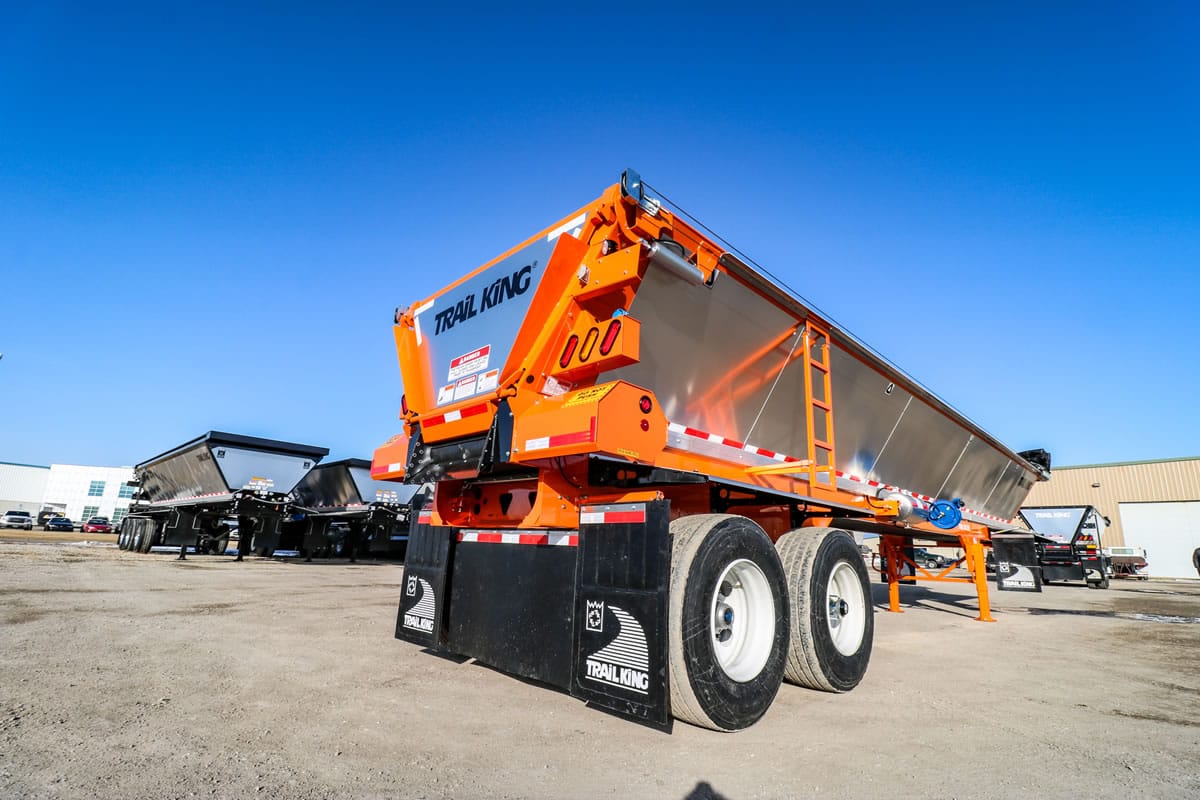
At Trail King, we understand that a trailer only delivers value when it is ready to work. Unexpected downtime can disrupt schedules, reduce fleet capacity and increase operating costs.
While no piece of equipment can eliminate all downtime, choosing the right trailer and properly maintaining it can help reduce preventable disruptions.
Reducing trailer downtime starts with selecting equipment designed for your workload and operating environment. Pair the right trailer with preventive maintenance, routine inspections, and dependable parts and service support to help minimize preventable disruptions and keep your operation moving.
How the Right Trailer Helps Reduce Downtime
Reducing downtime starts before a trailer ever hits the road.
A trailer that is properly suited to the application is better positioned to handle the demands placed on it. During the selection process, consider:
- Payload
- Material or equipment type
- Loading and unloading requirements
- Terrain
- Hauling frequency
Beyond payload capacity, evaluate how the trailer’s configuration, loading requirements, operating environment, and expected duty cycle align with your work. Choosing equipment suited to these demands can help avoid unnecessary component stress, support dependable performance, and reduce the risk of premature wear.
Choose the Right Trailer for Your Application
Different hauling applications create different demands.
A trailer carrying heavy construction equipment faces different stresses than one moving asphalt or aggregate. Likewise, a trailer operating more frequently on demanding job sites may experience different wear than equipment primarily traveling on highways. Matching the trailer to the job can help prevent unnecessary wear and support dependable long-term performance.
For example, fleets hauling heavy construction equipment need to evaluate loading requirements, payload, and job-site conditions differently from operations transporting asphalt or aggregate. Trail King’s range of hauling solutions includes trailers designed for different applications, making it important to evaluate the equipment category and configuration that best fit the work. Explore Trail King’s trailer products to compare available hauling solutions.
Prioritize Trailer Durability and Service Life
Durability affects more than how long a trailer lasts. It can also influence how frequently equipment needs attention.
For fleets operating trailers daily, repeated loading, unloading, and hauling can place significant stress on structural and mechanical components. Selecting a trailer designed for the intended application, then maintaining it according to manufacturer recommendations, can help manage wear and support dependable performance over its service life.
Durability should also be considered alongside long-term maintenance needs. A trailer is an investment, so the objective should be dependable performance throughout its service life rather than simply meeting today’s hauling requirements.
Preventive Maintenance Helps Keep Trailers Moving
Waiting for something to fail before servicing a trailer can turn a manageable maintenance issue into unexpected downtime.
Preventive maintenance gives operators an opportunity to identify developing problems before they cause breakdowns. Routine inspections can reveal wear, damage or components that need attention while maintenance can still be planned around the operation’s schedule.
Maintenance requirements vary based on the trailer, age, workload and operating environment. Manufacturer recommendations should be the starting point for developing an appropriate maintenance schedule.
Inspect High-Wear Trailer Components Regularly
Trailer inspections should be thorough and consistent. Tires, brakes, wheel ends, suspension, electrical systems and structural components are among the areas that should receive regular attention.
Heavy loads and demanding duty cycles can also place additional stress on trailer components, making inspections especially important for equipment used in challenging applications.
Keeping records of inspections and repairs can make it easier to spot recurring issues. If the same component or system repeatedly requires attention, it may signal a larger maintenance or equipment issue that needs to be addressed.
Plan Maintenance to Minimize Downtime
Planned maintenance is generally easier to manage than an unexpected breakdown.
Scheduling inspections and service as part of normal fleet operations gives maintenance teams greater control over when equipment is taken out of service. When several maintenance needs can be addressed during the same planned service period, fleets can also avoid repeatedly taking the trailer out of operation.
Maintenance records can provide useful insight into repair frequency, recurring problems and the amount of time individual trailers spend out of service. That information can help fleet managers make better decisions about maintenance, refurbishment and eventual replacement.
Parts and Service Support Matter
Even well-maintained trailers will eventually require replacement parts or repairs. Having access to dependable parts and service support can help get equipment back into operation when maintenance is required.
Trail King supports its equipment with parts, customer service and refurbishment capabilities. For older equipment that still has a sound foundation, refurbishment can also provide an opportunity to address multiple areas of wear and extend the trailer’s useful life.
When evaluating support options, consider parts availability, access to technical assistance, and the condition of older equipment. Addressing repair needs promptly and assessing whether refurbishment is appropriate can help fleet managers plan for continued use or replacement rather than making decisions only after an unexpected failure. Explore Trail King parts and support or learn about trailer refurbishment.
Thinking about serviceability and support throughout the trailer lifecycle can help fleets plan ahead rather than react only after equipment fails.
Frequently Asked Questions About Trailer Downtime
What Are the Most Common Causes of Trailer Downtime?
Unexpected trailer downtime can result from tire damage, brake problems, wheel-end issues, electrical faults, suspension wear, or structural damage. Overloading, operating outside the trailer’s intended application, and delayed maintenance can also contribute to equipment problems. Regular inspections and repair records help fleets identify recurring issues before they cause further disruption.
How Often Should a Commercial Trailer Be Maintained?
Commercial trailer maintenance frequency depends on the trailer type, manufacturer recommendations, age, workload, and operating conditions. Follow the applicable maintenance schedule and inspect safety-critical components as required. Heavy use and demanding environments may warrant more frequent attention.
How Can Fleet Managers Track Downtime for Equipment?
Record when each trailer is taken out of service, the reason for the interruption, repair duration, parts required, and return-to-service date. Reviewing these records can help fleet managers identify repeat failures, compare maintenance costs, and make more informed decisions about repairs, refurbishment, or replacement.
Keep Your Operation Moving With Trail King
Reducing trailer downtime starts with choosing equipment suited to your hauling needs and continues with preventive maintenance, dependable parts, and timely service. Trail King offers hauling solutions, parts support, and refurbishment services to help fleets maintain their equipment throughout its working life.
Contact Trail King to discuss your equipment needs and determine which hauling solutions and support options are right for your operation.