
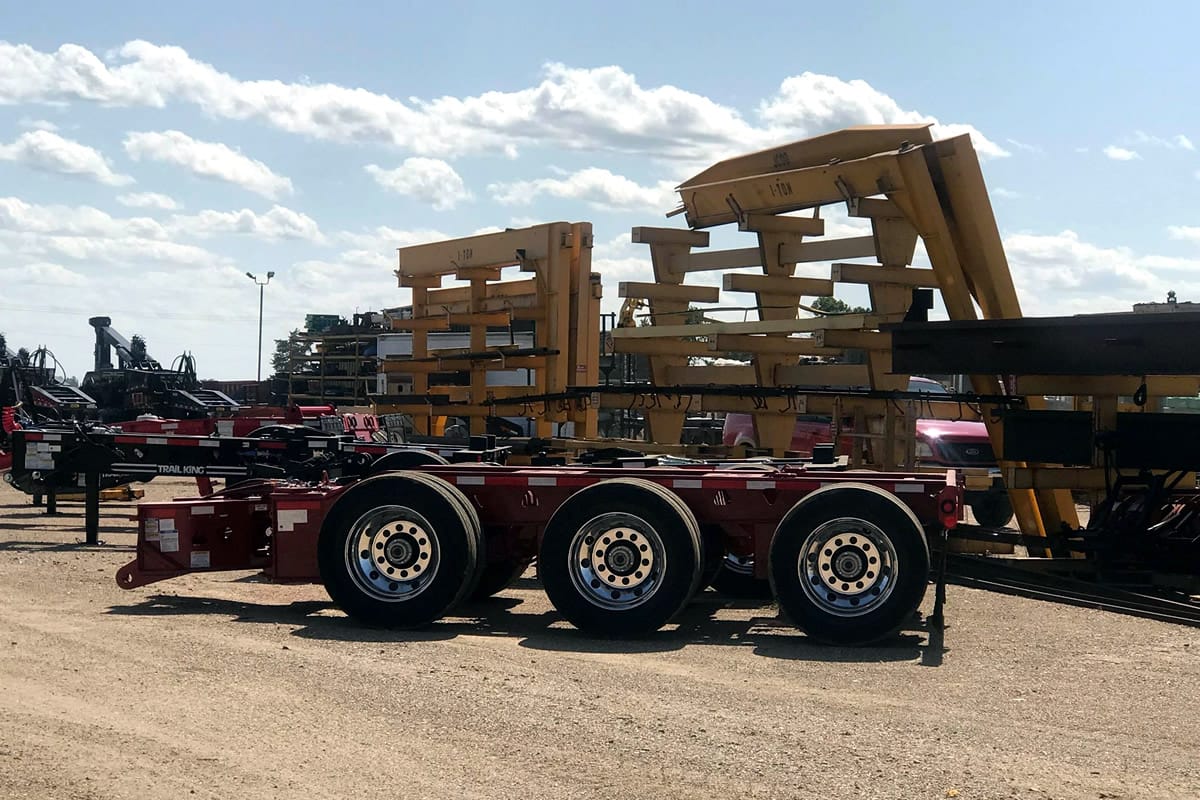
At some point, every trailer needs more than routine maintenance. Fleet managers and owner-operators must decide if refurbishing will keep their equipment productive or if replacing it is a smarter financial and operational choice.
At Trail King, we know that keeping your equipment running is key to your business. Deciding what to do involves more than a trailer’s age. You should also consider its condition, how often it needs repairs, its maintenance history, performance, downtime, and what you’ll need to haul in the future.
Start With the Condition of Your Trailer
Before you compare the costs of refurbishing or replacing, take a close look at the trailer. Age is helpful to know, but the trailer’s condition usually tells you more about how much life it has left.
Check the frame and other main parts, along with the axles, suspension, brakes, electrical and hydraulic systems, and decking. If the trailer’s foundation is solid, it might be worth refurbishing, even if some parts need work.
Maintenance history is important. A trailer that’s regularly maintained often lasts longer than one with ongoing problems or repeated breakdowns.
What Are the Most Common Trailer Repairs?
Typical trailer repairs include fixing structural wear, axles, suspension, electrical and hydraulic systems, and decking. The specific repairs needed depend on how the trailer is built, how it’s used, and the conditions it operates in.
At Trail King’s Factory Service Center in Mitchell, South Dakota, we offer everything from basic maintenance to full restorations. Repairs can cover the frame, structural parts, air, electrical, and hydraulic systems, axle components, hardwood decking, and high-tensile steel.
The type and frequency of repairs can also reveal whether your trailer is experiencing isolated wear or recurring problems that may indicate a larger reliability issue. It can help you decide if it’s worth investing more in your current trailer. Refurbishment can be a practical option when the trailer’s core structure remains sound and repairs can restore dependable performance.
Instead of fixing problems one by one, a full refurbishment lets you tackle several worn areas at once. This can make your trailer last longer, look better, and possibly boost its resale value.
This is especially helpful if your current trailer still meets your hauling needs and buying a new one would cost much more.
When Trailer Refurbishment Makes Sense
Refurbishment is generally a better option when the trailer’s structural components remain serviceable and the problems are limited to specific areas that can be repaired or replaced. It can make sense when repairs address identifiable wear rather than recurring failures, and when the trailer still meets your operation’s current hauling requirements. The expected additional service life should also justify the investment. When these factors line up, refurbishment can restore dependable performance and extend the useful life of a trailer without replacing equipment that still has a solid foundation.
What Factors Are Considered When Deciding Whether to Replace or Repair a Piece of Equipment?
When deciding, look beyond just the repair bill. Think about:
- current structural condition
- frequency and cost of recent repairs
- expected remaining service life
- availability of replacement parts
- downtime associated with recurring problems
- current and future hauling requirements
- potential resale value
- cost of refurbishment compared with replacement
Considering all these factors together gives you a better idea of how valuable the trailer is to your business.
When Is It Time to Replace Your Trailer?
Replacing your trailer starts to make sense when repairs happen more often, the structure is badly worn, or reliability issues disrupt your daily work.
Signs Replacement May Be the Better Choice
Replacement may be the better option when the trailer has major structural damage or deterioration that makes refurbishment impractical. Repeated failures in the same systems can also indicate that continued repairs may not provide the reliability your operation needs. If repair costs keep increasing without improving performance, or critical parts and components are becoming difficult to source, investing in an older trailer may make less sense.
You should also consider replacement if the trailer no longer matches your current hauling requirements, including the loads, dimensions, or applications your operation requires. If frequent repairs and extended downtime are consistently reducing fleet capacity or affecting revenue, a newer trailer may provide better long-term value and reliability.
The main goal isn’t just to save on repairs. It’s to choose the option that gives you the best mix of productivity, reliability, and value for the future.
Factor Downtime Into the True Cost
A repair bill doesn’t show the full picture.
If a trailer is often out of service, downtime can mess up schedules, lower your fleet’s capacity, and add extra costs. A cheaper repair might not really save money if the trailer keeps needing more work.
Check how often your trailer has been out of service and if those problems are happening more. Doing refurbishment at the right time can help avoid repeated issues. If repairs aren’t improving reliability, replacing the trailer might be the better long-term solution.
Look at the Total Cost of Ownership
The cost of refurbishment or replacement is only part of the financial picture. When comparing your options, consider the trailer’s total cost of ownership over its expected remaining service life. This can include labor and parts for refurbishment, anticipated future repairs, downtime and lost productivity, and ongoing maintenance costs. If you’re considering replacement, factor in acquisition or financing costs, expected service life, and the potential resale or trade-in value of your current trailer. Looking at these costs together can give you a clearer picture of which option provides the better long-term value for your operation.
Compare the Trailer’s Future Use With Its Current Capabilities
A trailer may still be mechanically sound enough to refurbish but no longer be the right equipment for your operation. Consider whether your hauling needs have changed since you purchased the trailer. Changes in load requirements, dimensions, hauling applications, fleet utilization, or operating environments may affect whether the trailer can continue to meet your needs safely and efficiently.
Review the trailer’s current equipment specifications and compare them with what your operation will require in the future. If the trailer cannot accommodate the loads, applications, or operating conditions you expect, replacement may make more sense than investing in a refurbishment. This helps ensure your equipment investment supports both your current workload and your long-term fleet needs.
What Maintenance Is Necessary on Trailers?
Preventative maintenance is key to making your trailer last longer and spotting problems before they get costly.
Maintenance needs depend on the trailer, how it’s used, and where it operates. Operators should focus on the main structural parts and systems that keep the trailer safe and reliable. Regular inspections can also reveal wear patterns that inform future decisions about refurbishing or replacing.
Maintenance records can also help you identify patterns that matter when evaluating a trailer’s future. Look for recurring component failures, increasing repair frequency, structural wear, and repeated issues with brakes, suspension, hydraulic, or electrical systems. Records can also show which components are approaching replacement and how often the trailer has been out of service for extended periods. Reviewing these patterns can help you determine whether routine maintenance and targeted refurbishment are likely to keep the trailer productive or whether replacement may provide better long-term reliability.
Keeping good maintenance records helps when you’re evaluating equipment. They show the repair history, any recurring problems, and the trailer’s overall condition.
Make a Decision With Long-Term Value in Mind
There isn’t one set age or repair cost that means it’s time to replace every trailer. It’s better to look at your equipment and decide based on your specific operation.
If your trailer has a strong base and can be refurbished at a reasonable cost, it can help you get more use out of it and protect your investment. But if the structure, repair needs, and downtime are hurting your business, replacing the trailer might be the better long-term choice.
Frequently Asked Questions
How long can a refurbished trailer last?
There is no universal lifespan for a refurbished trailer. Its remaining service life depends on its original condition, the extent of the refurbishment, its application, operating conditions, and ongoing maintenance.
Does refurbishing a trailer increase resale value?
Refurbishment can improve a trailer’s condition and may support its resale value, particularly when it addresses significant wear and restores important components. However, resale value also depends on the trailer’s age, specifications, condition, maintenance history, and market demand.
Can refurbishment improve trailer performance?
Refurbishment can address worn structural, mechanical, electrical, and hydraulic components, helping restore the trailer to a more dependable working condition rather than simply improving its appearance.
Final Thoughts
Deciding whether to refurbish or replace your trailer means thinking past just the next repair. Look at its condition, maintenance history, reliability, downtime, and what you’ll need it to do in the future.
Making this decision ahead of time can help you avoid surprise downtime, manage long-term costs, and keep your fleet ready for what’s next.
Check out Trail King’s refurbishment services and durable trailer options to keep your equipment running strong for the long term.